By Happiness E. Aigbogun | Karikari Lab
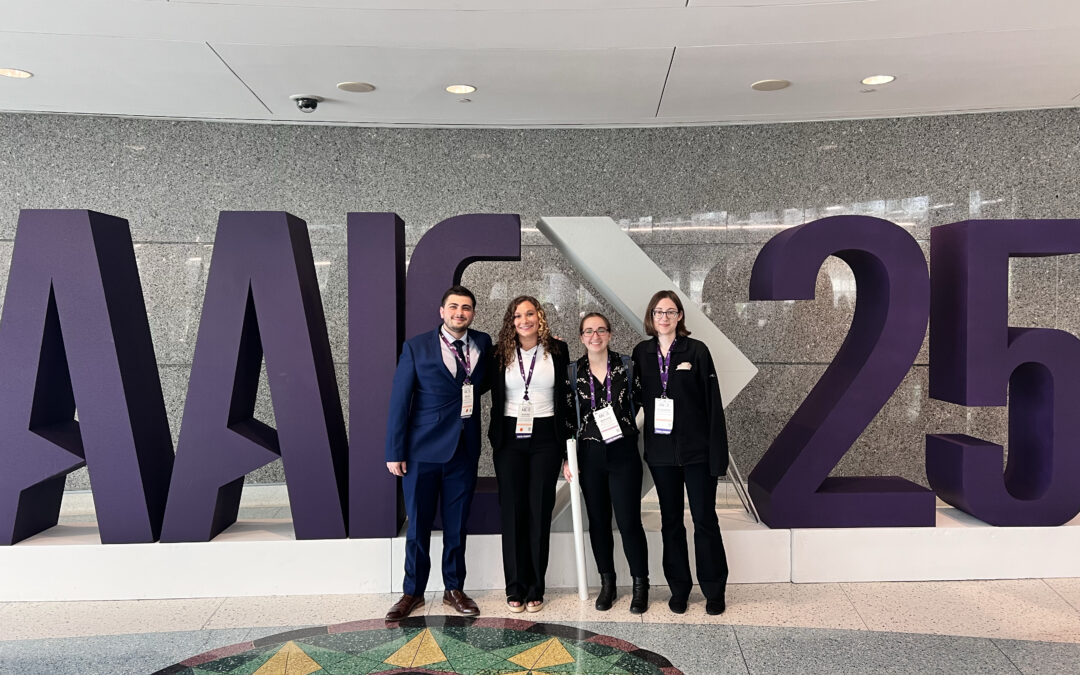
This summer, members of our Karikari Lab team had the incredible opportunity to attend the Alzheimer’s Association International Conference (AAIC) from July 27th to July31st, 2025, held in Toronto, Canada, a city known not only for its cultural vibrancy but also its commitment to advancing global healthcare research. AAIC is the world’s largest and most influential gathering of researchers, clinicians, and professionals dedicated to Alzheimer’s and dementia science, making it an invaluable experience for anyone in the field.
Over the course of the conference, our colleagues immersed themselves in groundbreaking research, discussions, and networking sessions that brought together experts from around the globe. Key themes this year included advancements in early detection, emerging therapies, and the growing importance of culturally sensitive care approaches in dementia treatment.
“It was an honor to stand alongside some of the most influential researchers in the field. The experience was both humbling and inspiring,” said Xuemei Zeng, PhD.
Scientific Highlights from the Lab
Dr. Xuemei Zeng, PhD, MPH – Poster #322
Title: Plasma biomarkers predict incident cognitive decline up to 29 years prior to disease onset: A memory clinic cohort study of 4,073 participants.
Dr. Zeng shared compelling evidence that plasma biomarkers can predict cognitive decline decades before symptoms appear, as far back as 29 years. Her presentation highlighted the immense potential of early detection to enable exploration of preventive intervention strategies, like lifestyle interventions or medications, before patients show detectable clinical symptoms.
“The ability to forecast decline nearly three decades ahead is a paradigm shift,” said Dr. Zeng.
Dr. Alexandra Izydorczak, PhD – Poster #325
Title: Plasma proteomic profiling of neurodegenerative proteins in autosomal dominant Alzheimer’s disease with PSEN1 mutations relative to sporadic AD and clinically unimpaired controls.
Dr. Izydorczak’s work focused on understanding proteomic patterns in genetically inherited Alzheimer’s disease and comparing them to the patterns found in the more common sporadic AD cases, which do not have a known direct, inherited cause. Her findings contribute to the evolving conversation about precision medicine and personalized biomarker diagnostics.
“It’s crucial that we understand the biological differences across forms of Alzheimer’s. This helps refine our tools for early and accurate diagnosis,” she noted.
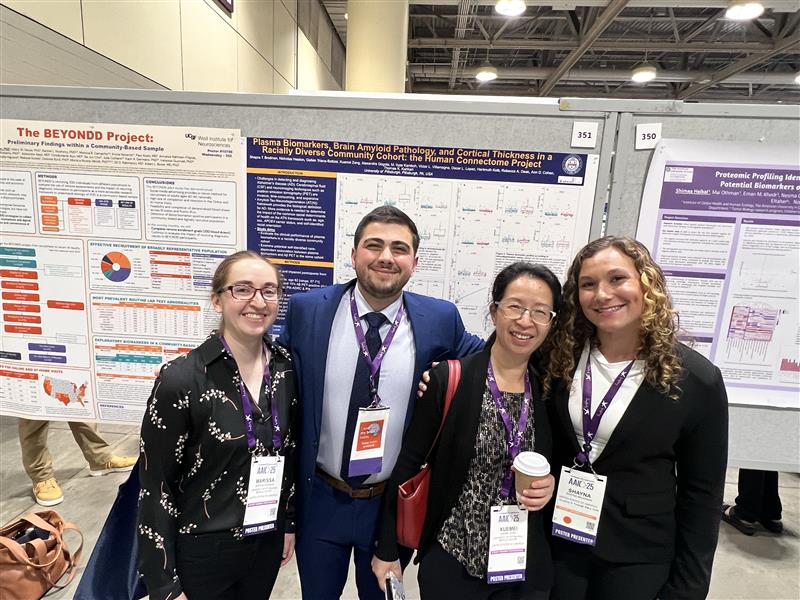
Expanding Our Reach – In-Person and Remote Presentations
While several members of the Karikari Lab were present on site in Toronto, we were also proud to have team members participate remotely demonstrating that distance is no barrier to impactful science. Our remote presenters contributed to the conference by delivering poster presentations and engaging in virtual sessions that amplified our lab’s contributions to AD research.
“Even from afar, it was exciting to be part of such a dynamic global exchange of ideas,” said Wasiu Balogun, PhD, who presented on Multi-cohort evaluation of plasma p-tau217+ classification accuracies and threshold for early detection of amyloid-beta pathology. This hybrid participation not only extended our presence at AAIC 2025 but also reinforced the importance of accessible, inclusive science communication, which is a value central to our lab’s mission.
Networking, Learning, and Global Collaboration
AAIC was not just about presenting; it was a vibrant hub of learning and connection. Our team engaged with a wide array of researchers, from rising trainees to established pioneers, exchanging ideas on topics ranging from blood biomarkers and neuroimaging to digital diagnostics and equity in care. “Every session reminded us that we are part of a much bigger mission to understand, detect, and ultimately defeat Alzheimer’s disease,” shared Marissa Farinas, MS.
A Global Stage, A Local Impact
The Karikari Lab’s presence at AAIC underscores our lab’s commitment to developing accessible, scalable, and scientifically rigorous biomarkers for Alzheimer’s disease. These efforts support our vision of equitable early detection, especially for underrepresented and resource-limited populations.
Looking Ahead
Returning from AAIC 2025, our team is more energized than ever to continue this vital work. With exciting collaborations forming, manuscripts underway, and continued biomarker validation efforts in motion, we are committed to pushing boundaries in Alzheimer’s research.
“This is just the beginning. The future of diagnostics is blood-based, and we are proud to be leading that charge,” said Dr. Thomas Karikari.
Stay Connected
Follow the Karikari Lab’s ongoing research and updates:
Website: Karikari Lab
LinkedIn: LinkedIn